What is sewage sludge?
Wastewater treatment in sewage treatment plants is invariably accompanied by the formation of a large amount of sediment. This is due to the strong concentration of polluting substances contained. It is recommended that they be subjected to additional treatment in order to prevent the danger of environmental pollution. Once the treatment has been completed in the plant. The sludge is removed by the use of submersible and hydraulic pumps. In this article, we will look at how the process of treating sewage sludge is done before taking away the waste material.

A byproduct of wastewater treatment is sewage sludge. Stormwater and sewage enter the sewage system and go to wastewater treatment facilities. This is when the solid and liquid wastes are separated through settling. They are currently being "digested," or degraded by microorganisms. These processed separated solids, or sewage sludge, contain a variety of known and unidentified dangerous substances. All waste flushed into the sewer system is included in this, including household, medical, industrial, and chemical waste. Furthermore, there also exists chemicals and metals that leach from the sewer pipes, and novel materials in the wastewater treatment plant. This is a result of the presence of various chemicals and organic compounds contained within.
The problem of decontamination and utilization of sludge obtained in the process of wastewater treatment – is among the most difficult stages of the treatment process. At the same time; according to specialists, in terms of the developed technologies, it is currently one of the poorly developed technological relation stages.
Usually, the sludge treatment process includes compaction, stabilization of the organic part, dewatering, and drying. The ultimate goal is to obtain an environmentally friendly product. Moreover, the maximum utilization of the valuable components contained in the sludge.
Characteristics of wastewater sludge
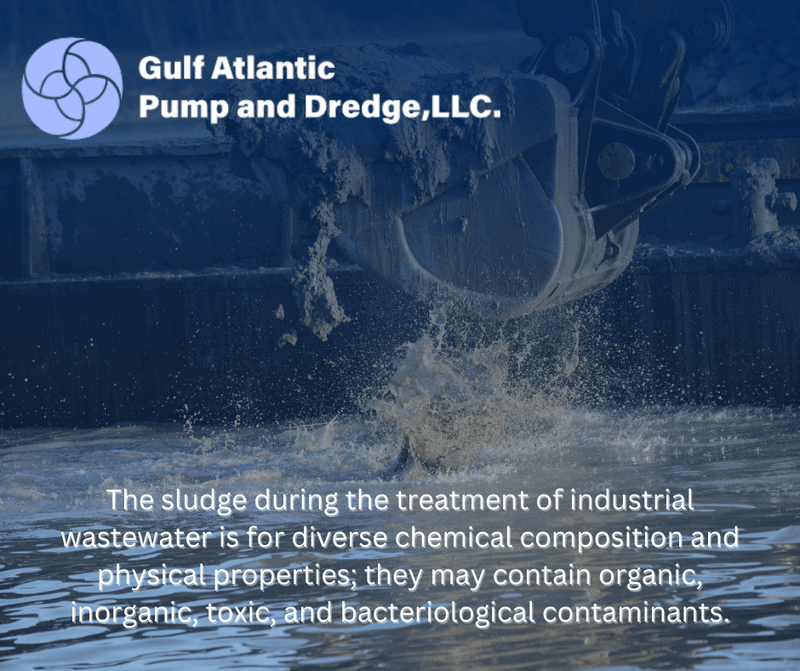
The sludge during the treatment of industrial wastewater is for diverse chemical composition and physical properties; they may contain organic, inorganic, toxic, and bacteriological contaminants. Their volume largely depends on the composition of the treated wastewater and the used treatment methods.
For much of the resulting sewage sludge, the methods and facilities used to treat municipal sewage sludge are considered suitable. Including methane tanks, vacuum filters, centrifuges, etc. Some industrial sewage sludge, however, contains toxic substances. These are cyanides, rhodamines, and phenols, as well as compounds of arsenic, chromium, copper, lead, nickel, and others, which are also characterized by a strong toxic effect.

They can hinder the normal course of some of the processes. For example, the time required for the decay processes in the methane tanks can be increased. It is also considered inappropriate to use them for agricultural purposes. However, a large part of them can be reused in production as secondary raw materials.
Composition of sediments
Basically, the sediments are obtained from the treatment of industrial wastewater. Conditionally they can be divided into three groups: sediments, in the composition of which mineral substances predominate; sediments containing mostly organic constituents; and sediments containing substances of organic and mineral origin.
Usually, the treatment of the sediments of the first group does not present any particular difficulty. In most cases, these sludges are left in open digesters and then disposed of. Such are, for example, the sediments obtained from the treatment of wastewater from the metallurgy and coal mining industry. Usually, the process of these sludges does not include their stabilization in methane tanks. Their processing is mostly related to their dewatering. Since a large part of these sludges is a waste product of a certain production process. They can contain valuable substances such as non-ferrous and rare metals. Different physicochemical methods are usually used to extract valuable ingredients. Some dewatered sludge can be used as a raw material for the production of construction materials. Such are, for example, sludges from the metallurgy, pulp and paper, and wood processing industries.
Sludges from the second and third groups are characterized by a great variety in composition and properties, and therefore for each specific type of sludge, a separate solution is needed in terms of treatment and utilization.
The chemical composition of industrial wastewater sludge also influences to a considerable extent the choice of method for their treatment. For example, sludges obtained from the treatment of wastewater containing petroleum products are for dewatering, after which incineration in various facilities such as fluidized bed apparatus is considered very suitable.
Sludge treatment processes

In principle, the sludge treatment technology includes several main processes – compaction, stabilization (mineralization) of the organic part, dewatering, drying, burning, and use.
Compaction
Compaction is a process by which the aim is to significantly reduce the volume of sediments, which will facilitate their further treatment. It is mandatory in any technological scheme for sludge treatment. It is done with compactors, and among the most commonly used methods are gravity, flotation, centrifugal field compaction, and filtration. Of all these methods, gravity compaction is considered the most easily applicable and economical method. In this method, sediment compaction takes place under the action of gravitational forces. Thus compacted sludges are usually at least 87-89% moisture, and the duration of compaction is assumed to be from 4 to 24 hours and depends on the properties of the sludges.
Stabalization
Sludge stabilization is a process in which the organic matter contained in the sludge is broken down. It is carried out aerobically and anaerobically in digesters or aeration facilities. The purpose of stabilization is to protect the environment from foul-smelling gases and contamination.
The main purpose of dewatering is to reduce the volume of sludge and facilitate its transport, recovery, incineration, or disposal. It is carried out in natural or artificial conditions. Dewatering in natural conditions is carried out in drying fields and sludge lagoons, in which the humidity is reduced to 55%. Dewatering in artificial conditions is carried out mechanically by applying static and dynamic methods. Static methods include vacuum and pressure filtration, carried out with the help of various types of vacuum filters, filter presses, and sieve presses. Dynamic dewatering methods are carried out in centrifuges, cyclones, and sieves. The effect of mechanical dewatering can be enhanced if the sludge is pre-treated.

Gulf Atlantic offers hydraulic submersible pumps to help remove digester solids and wastewater. We manufacture our pumps in our workshop and provide them to waste plants throughout the globe. We also provide submersible pumps and custom dredges for marine applications.