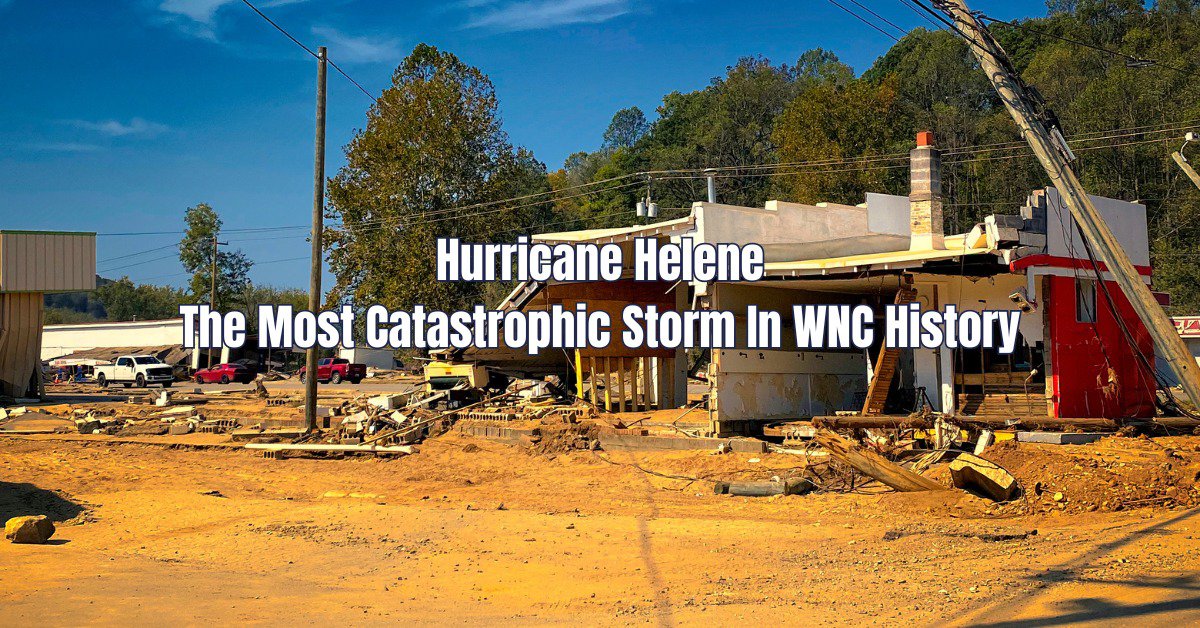
Hurricane Helene: The Most Devastating Hurricane In WNC
Hurricane Helene wasn’t just another storm—it was a catastrophic force that forever changed the landscape of Western North Carolina. The region, known for its protection by the Blue Ridge Mountains, was unprepared for Helene's unprecedented destruction as it powered inland, well over 500 miles from where it made landfall on the Florida coast.
Helene wasn’t confined to the coastlines. With more than 29 inches of rainfall in just 48 hours, the storm brought with it torrential rains, violent winds, and a deluge that transformed rivers into raging torrents, swallowing homes, bridges, and lives in its path. It inevitably triggered deadly landslides, flash floods, and widespread destruction, becoming one of the worst natural disasters ever to hit the area in the last two decades.
Widespread Destruction Across the Mountains

The damage has been severe in cities like Asheville, Canton, and Boone. The French Broad River surged over Asheville’s banks, damaging or destroying nearly 25% of the homes and businesses with losses estimated to be over $800 million. Hendersonville and Boone saw similar devastation, with wind gusts exceeding 90 miles per hour toppling trees and power lines, cutting off access to entire neighborhoods, and leaving rescue crews scrambling to reach the hardest-hit areas.
Further west, Maggie Valley was virtually erased by landslides, with entire homes swept off their foundations by the relentless gale. Rural communities in the Appalachian foothills, long considered safe from hurricanes, were left isolated as roads crumbled and power lines were knocked out, leaving thousands in darkness.
Emergency response teams have since cleared over 300 landslides across the region, some of which buried communities in feet of mud.
The Toll on Life, Property, and Livelihoods

As of October 2024, officials have confirmed 95 deaths in North Carolina alone, with that number expected to climb as rescue teams continue to search through the rubble. Among the fatalities, many were residents trapped in their homes by flash floods or buried by landslides. Thousands of families remain displaced, and over 65,000 homes were left without power, some for over a week as utility crews struggled to restore service amidst the chaos.
The economic toll on the region’s infrastructure is staggering. Early estimates place total damage to WNC at over $3.5 billion, with that figure likely to grow. For a region heavily reliant on tourism, the timing couldn’t have been worse. Local NC businesses along the Blue Ridge Parkway, including hotels, restaurants, and shops, were submerged or destroyed, wiping out nearly $500 million in revenue during what is usually peak tourist season.
Agricultural Devastation By Hurricane Helene

The storm’s impact wasn’t just on infrastructure and homes. WNC’s farming community, which provides a significant portion of the state’s produce and livestock, was hit hard. Floodwaters destroyed an estimated 40% of the region’s farmland, leaving fields unusable and farmers with massive losses. Livestock losses were equally catastrophic—tens of thousands of cattle, chickens, and pigs were either drowned in floodwaters or killed by collapsing barns and enclosures.
One local farmer from Hendersonville, whose family has worked the land for four generations, described the scene: “I lost almost everything in less than a day. The water came so fast, we didn’t even have time to save the animals. This storm took our livelihood, and I don’t know how we’re going to recover.”
His story is echoed across the region, where farming losses are estimated to exceed $200 million.
Why Hurricane Helene Was Such a Big Deal

What set Helene apart from past storms wasn’t just its sheer size, but how it maintained its intensity so far inland. Typically, the Appalachian Mountains act as a buffer, weakening hurricanes as they move inland. This particular hurricane was powered by record-breaking moisture levels and a changing climate, defying expectations.
Meteorologists measured wind speeds up to 100 miles per hour in some mountain passes, with rainfall totals of over 20 inches recorded in several locations, including 24 inches in Haywood County alone.
Helene’s impact wasn’t just about its strength—it was about the region’s lack of preparedness for such a disaster. For decades, WNC has operated under the assumption that hurricanes are a coastal problem. This facade was shattered by Helene.
What Lies Ahead for Western North Carolina
In the wake of Hurricane Helene, the focus has shifted to recovery and the sobering reality that the region must adapt to a new climate reality. For years, the region’s infrastructure was built with the idea that mountain communities were safe from hurricanes.
As the cleanup begins, there is an urgent call for investment in stronger, more resilient infrastructure, from roads and bridges to emergency preparedness systems. For many, the question now is not whether another storm like Helene will come—but when.