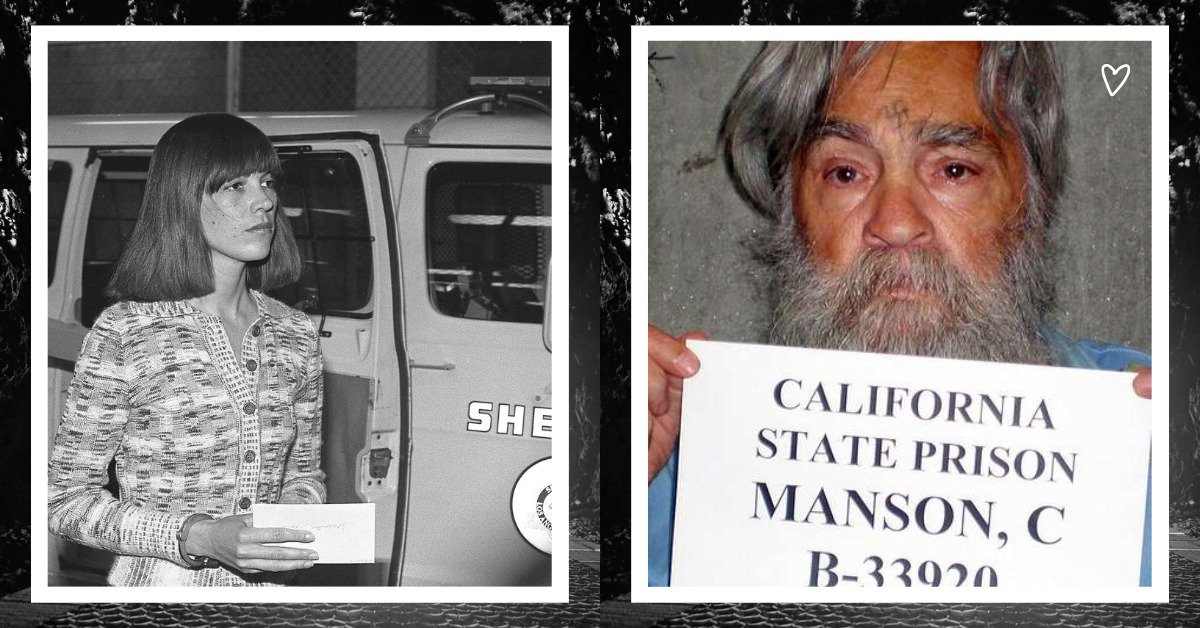
Leslie Van Houten Release Raises Little Response From Cult Member
In a surprising turn of events, Leslie Van Houten, a notable member of the infamous Manson cult, was recently released from prison. Yet, her release seems to have garnered an unexpectedly muted response from her erstwhile cult associates. Media channels are speculating about the sudden silence, raising questions about the past relationships and power dynamics within the cult. This marks a significant moment in Van Houten's story and possibly signals a shift in the legacy of the Manson cult.
Charles Manson, a small man with long hair, was released from Terminal Island in 1967 after spending most of his life in prison or juvenile institutions. He looked like any other self-proclaimed guru with a guitar, traveling through San Francisco's Haight Ashbury, to the growing Hippie movement of the time. Haight Ashbury.
A Dianne Lake joined Charles Manson's group when she was young. Later, she testified against him in his trial. She is one of the few people who can tell us what happened in the summer of 1969. Like many at the time, Dianne's family chose to tune in, turn on and drop out. Only Dianne didn’t fit in at the Hog Farm Commune, where her parents chose to live. Unbeknownst to Dianne, while she had been in San Francisco, her parents gave “Black Bus Charlie,” as he was known to them, a photo of her saying if they see her tell her where they are.
This became the perfect opportunity for Manson to show his “magic.” When Dianne went to a party where he was there with his girls, they greeted her with the love bombing “Dianne, Dianne.” This was just what a young girl needed to hear, and she was instantly swept into his orbit. At first, life with the Family was a happy place, like a magical mystery tour. But gradually, Charles Manson became paranoid, believing he was the son of man. He also spouted an apocalyptic vision of a race war that was supported by a delusion he gleaned from the Beatle’s White Album.

1969, the Summer of Love in Woodstock, New York, became anything but that for Southern Californians. On two devastating nights, August 8th and August 9, 1969, several of Manson's followers, at his behest, committed gruesome murders that would forever change America's sense of safety. On August 8, 1969, Tex Watson, with Susan Atkins, driver Linda Kasabian and Patricia Krenwinkel, gruesomely murdered 26-year-old actress Sharon Tate, 8 1/2 months pregnant at the time, and her friends, 35-year-old hairstylist to the stars Jay Sebring, Roman Polanski's friend 32-year-old Wojciech Frykowski and his girlfriend, coffee heiress, 25-year-old Abigail Folder.
The next night Manson guided followers to the home of successful supermarket executive Leno LaBianca. The house was next to a place where the family had visited in the past. Tex Watson, Patricia Krenwinkel, and Leslie Van Houten were tasked with murdering Leno LaBianca and his wife Rosemary, which they carried out. However, Leslie Van Houten claims to have stabbed a woman already dead.
Dianne Lake, who was fourteen years old when she met Manson and joined the commune, was living at Spahn Ranch on the night of the LaBianca murders. However, she had no knowledge of what had happened. In the middle of the night, she woke up to the smell of something burning. She saw Leslie Van Houten burning a purse and other things in the fireplace. She gave a bag of coins to Dianne and asked her not to reveal that she was there if the people who gave her a lift from Griffin Park should come looking for her.
Dianne and another young member of the Family were taken to the entrance of Death Valley the next day. They were going to meet others at Barker Ranch. That was when Tex Watson told Dianne what happened and that he was responsible. But now it was too late. Dianne would stay with the Family until the grand jury arraignment when she finally told authorities her actual age. She was sent to a mental hospital for nine months to help her recover and quit the drugs Manson used to control his followers, and also for her safety.
Witness Against Leslie Van Houten
Dianne became the final witness in the Manson Trial and a key witness in Leslie Van Houten's second trial as she was one of the only people who could verify what she had seen after the murders that could put Van Houten at the scene.
Dianne Lake's response to the release of Leslie Van Houten, one of the convicted murderers in the La Bianca killings, is a simple "no comment." Dianne witnessed Manson's descent into madness and saw how he influenced some of his followers to commit murders for him. To this day, people think Charles Manson was innocent of the killings, but Dianne was a firsthand witness to his control over the Family and believes they would not have done what they did but for him and how much they believed in him. But it was something they did. And according to her, they thought it would please him then. That is the definition of conspiracy for which Manson was ultimately tried and convicted.
Here is an interview with Dianne Lake and collaborator Deborah Herman regarding her experiences over fifty-five years ago as related in her memoir Member of the Family: My Story of Charles Manson, Life Inside His Cult, and the Darkness That Ended the Sixties.
Family Lake was deeply affected by her experience with the Family. She hopes that her words and book can serve as a warning for those who trust in false prophets and give their lives away to their cause.
Dianne is unsure about her ability to comment on the contentious release of Leslie Van Houten, who was sentenced to life in prison. However, Dianne is transported back to the past and recalls the fear that deeply affected her life. Writing the book was a healing catharsis that she hoped would mean her experiences could remain in the past. The Manson follower's unexpected release brought back memories for Dianne and everyone who read the headlines in August 1969.
Some events become the era's ethos, where there is a clear before and after. The assassinations of JFK, RFK, and Martin Luther King brought the Country together in mourning. Watergate created cynicism about politicians like never before. The events of 9/11 changed how we look at security on our native soil—the two nights of murder and mayhem orchestrated by Charles Manson in 1969 brought an end to innocence that still hurts today.
Image Citations
John Malmin, Los Angeles Times
JenniferLJohnson81, CC BY-SA 4.0, via Wikimedia Commons

Related Posts

Ghosts of the Frozen Frontier: Paranormal Tales from Antarctica
Dr Richard Gallagher: Evidence for Evil Spirits (1)