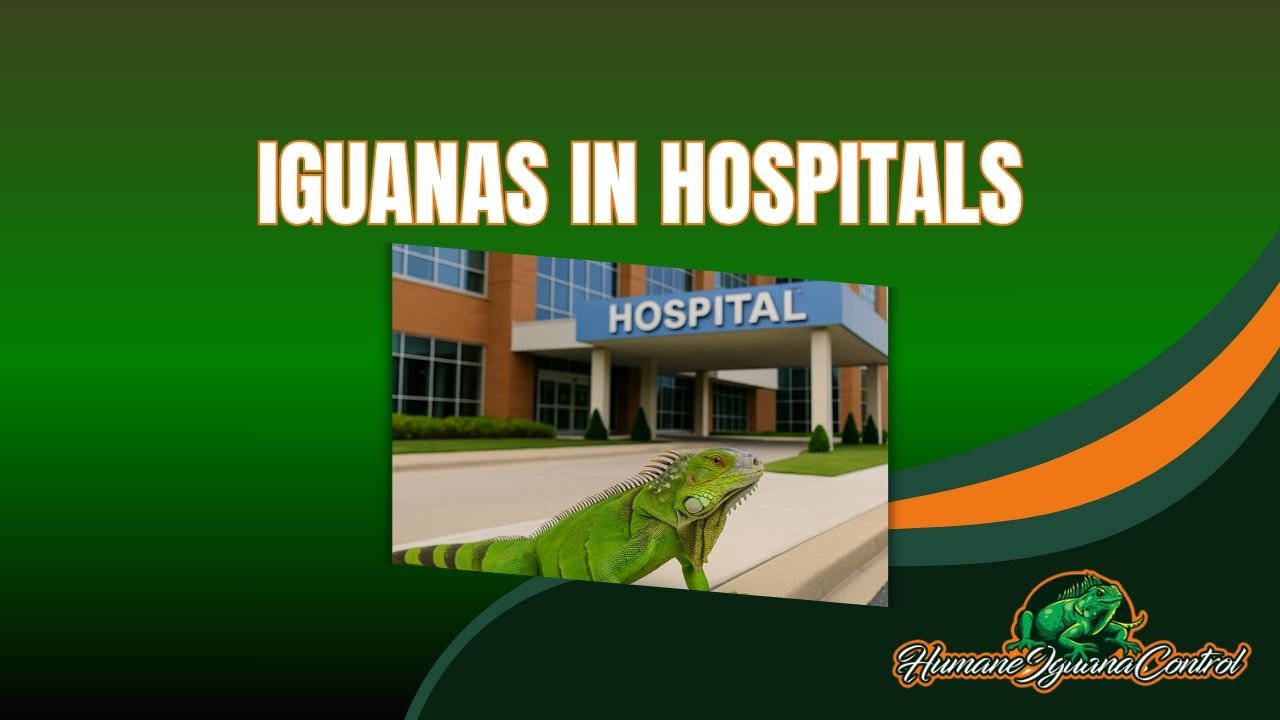
Iguanas in Hospitals: A Silent Threat to Public Health and Safety
When Wildlife Enters the Healthcare Space
In a place designed for healing and safety, the last thing anyone expects to encounter is an invasive reptile. But that’s precisely what Humane Iguana Control discovered during a recent visit to a local hospital in South Florida. Iguanas have infiltrated public spaces across the region, from schools and cemeteries to parks and now medical facilities. In this episode of The Iguana Chronicles, host Michael Ronquillo exposes a growing and overlooked issue: the impact of iguanas on hospitals and healthcare campuses.
Why Iguanas in Hospitals Are a Serious Concern
Health Risks in Sanitary Zones
Hospitals must maintain the highest standards of cleanliness. Yet iguanas, which are known to defecate frequently and indiscriminately, pose a direct contamination risk. Their feces may carry bacteria like Salmonella, which is especially dangerous in environments treating the sick or immunocompromised. When iguanas defecate in courtyards, near smoking areas, or even around food zones, they violate the very essence of a sterile environment.
Surprise Visitors: Iguanas Indoors
Michael shared a chilling observation: an iguana can follow a visitor through a door and end up roaming a hospital hallway. This isn’t just theoretical; similar incidents have occurred in hotels, office buildings, and yes, hospitals. The sight of a large reptile inside a medical facility can lead to panic, disruption, and potential physical danger if the animal feels cornered.
Property Damage and Liability Risks

Landscaping and Structural Damage
Iguanas are not just passive intruders. They eat ornamental plants, damaging expensive landscaping that hospitals and clinics pay thousands to maintain. During mating season, females dig large burrows under walkways and green spaces, weakening terrain and increasing the risk of surface collapse.
This is more than a nuisance; it becomes a liability. If a visitor or staff member unknowingly walks over a weakened section of ground and suffers a fall, the facility could face serious legal and financial consequences.
Infrastructure Hazards
From dented vehicles to broken AC units, iguanas can have a shocking impact on hospital infrastructure. Trees that overhang parking lots or rooftops are launching points for falling iguanas. Their body weight can dent hoods, crack windshields, or worse, damage HVAC systems when they climb into vents or fall into fans. The smell of decaying iguanas in theair systems isn’t just unpleasant; it's a sanitation emergency.
A Tactical Approach to Hospital Iguana Management
Specialized Scheduling for Sensitive Environments
Removing iguanas from hospitals requires a unique strategy. Humane Iguana Control adapts its approach to operate during off-peak hours—often at night—to avoid disrupting patients and staff. Their team conducts thorough sweeps of the grounds, focusing on common basking zones, shaded courtyards, and overgrown perimeters.
Tree Wrap and Preventive Strategies

One key recommendation: wrap trees with clear, non-invasive tree wrap. This slippery barrier prevents iguanas from climbing and eliminates high-risk fall zones. Tree trimming is also essential, especially near pedestrian paths, parking spaces, and rooftops. By removing overhead access, hospitals can prevent both climbing and falling hazards.
The Importance of Ongoing Monitoring and Education
Monthly Monitoring and Maintenance
Michael emphasizes that a one-time removal is not enough. Iguanas are resilient and territorial. That’s why Humane Iguana Control offers monthly monitoring programs to track activity, remove newcomers, and adjust deterrent strategies. This proactive approach saves hospitals money in the long run and minimizes the need for emergency intervention.
Staff Awareness and Reporting
Education is equally vital. Hospital staff should be trained to recognize burrows, droppings, and iguana behavior. A quick report to maintenance or contracted wildlife control can stop a minor intrusion from becoming a crisis. With the right knowledge and response plan, hospitals can reclaim control of their outdoor and indoor environments.
Final Thoughts: Don’t Wait Until It’s a Lawsuit

Iguanas in hospitals are more than just an oddity; they are a growing threat to health, safety, and property integrity. Whether it’s a patient slipping near a burrow or an HVAC system compromised by a nesting iguana, the consequences are real and costly.
Humane Iguana Control urges facilities across South Florida to take this issue seriously. Schedule an assessment, wrap those trees, monitor hot zones, and educate your staff. In a place where safety is non-negotiable, wildlife management must be part of the protocol.
Visit humaneiguanacontrol.com to schedule your hospital assessment today.