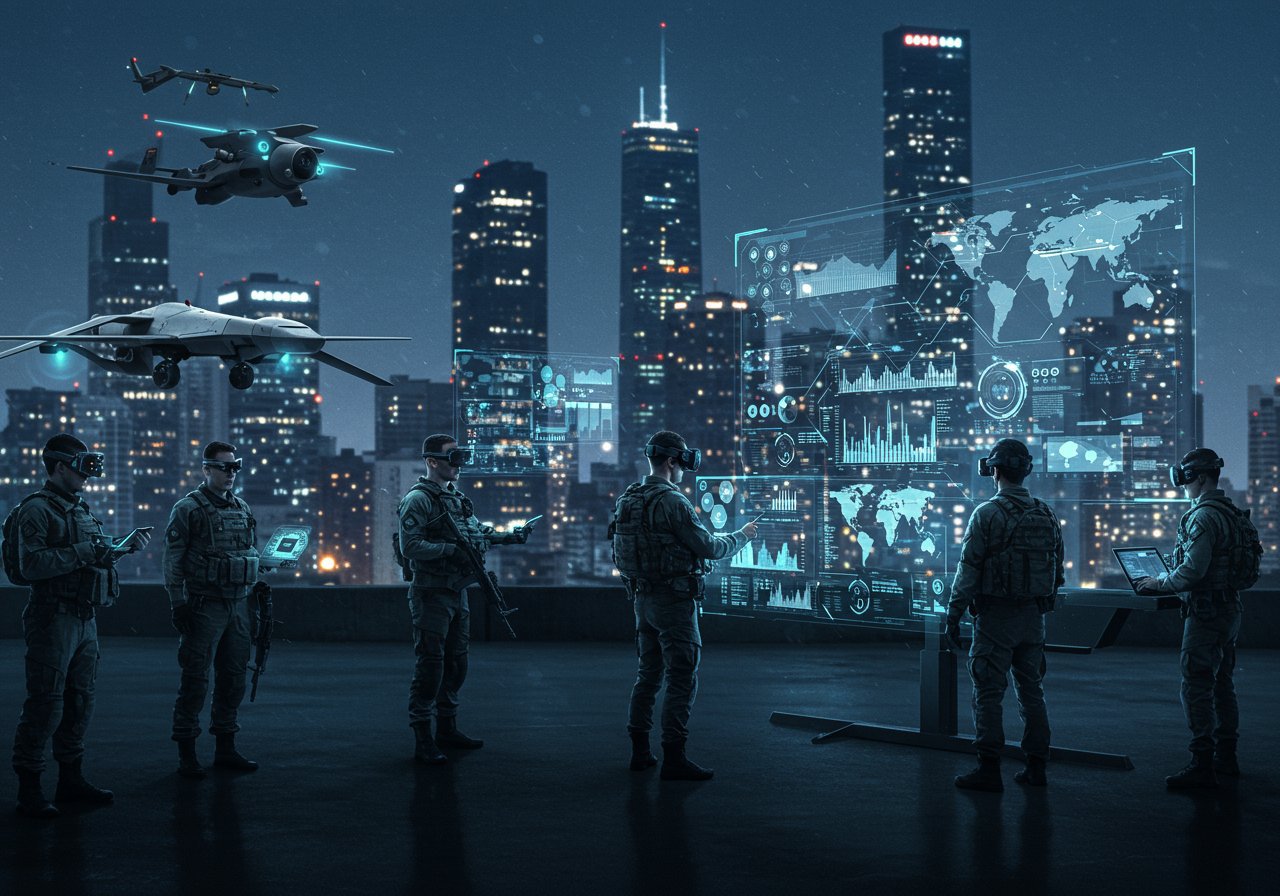
How artificial intelligence is reshaping intelligence dissemination for modern warfare
The evolution of warfare has always been intertwined with technological advancements. In this digital age, artificial intelligence (AI) stands at the forefront, offering transformative possibilities for intelligence dissemination in modern warfare. This seismic shift holds profound implications for international relations, geopolitical dynamics, and global peace efforts.
The rise of AI in intelligence services

With the world becoming more interconnected, intelligence agencies are increasingly leveraging AI to enhance their capabilities. Traditional methods of intelligence gathering and analysis are being complemented, and in some cases replaced, by AI-driven processes.
Enhancing data processing
The integration of machine learning and data analytics allows for the rapid processing of vast amounts of information, enabling agencies to draw insights with unprecedented speed and accuracy. AI systems can sift through signals intelligence (SIGINT) and imagery intelligence (IMINT) with greater efficiency. Automated processes reduce the time it takes to convert raw data into actionable intelligence, fundamentally altering how information is disseminated within military and strategic networks.
Real-time decision making
AI facilitates real-time decision-making by providing immediate access to crucial information. Predictive analytics offer insights into potential threats and scenarios, assisting military leaders in developing proactive strategies. The speed and reliability of these systems enhance the responsiveness of defense operations, minimizing the time from detection to response.
The impact on geopolitical strategies
Artificial intelligence is not only reshaping the tactics used on the battlefield but also redefining global power structures. The ability to quickly and effectively leverage AI-driven intelligence gives nations a strategic edge, influencing diplomatic engagements and geopolitical negotiations.
Strategic advantages
Countries investing heavily in AI technologies are positioning themselves as leaders in the new era of digital warfare. This technological race introduces a new dimension to international relations, where data supremacy becomes as critical as military might. With AI, countries can analyze economic, political, and military data to make informed strategic choices, gaining leverage in diplomatic dialogues.
Shaping global power dynamics
The long-term humanitarian implications of these shifts are profound, as they affect global stability and peace initiatives. AI-driven intelligence dissemination challenges traditional power dynamics, potentially leading to new alliances and shifts in global leadership. The balance of power may increasingly depend on technological prowess rather than mere military strength.
Ethical considerations and challenges
As AI continues to revolutionize intelligence dissemination, there are ethical and operational challenges that need addressing. The automation of surveillance and intelligence processing raises fundamental questions about privacy, human rights, and the potential for misuse. The humanitarian perspective is crucial, as societies must balance technological advancements with ethical responsibilities.
- Privacy Concerns: The capability to monitor and analyze communications on a massive scale risks infringing upon individual privacy rights. Ensuring data protection and oversight is critical.
- Misuse of Technology: Without proper regulations, AI-driven intelligence tools could be used for authoritarian control or misinformation campaigns, posing threats to democratic institutions.
- Algorithmic Bias: AI systems are only as unbiased as the data they are trained on, which can lead to skewed interpretations and decisions. Addressing bias is essential for fair and accurate intelligence assessments.
Embracing AI: A path to peace or conflict?
AI's potential to enhance intelligence dissemination in warfare is undeniable, but the path it carves is double-edged. While it offers new opportunities for peacekeeping and conflict resolution, it also introduces risks of escalation and warfare driven by algorithmic decisions.
Navigating risks and opportunities
Nations, organizations, and communities must work collaboratively to harness AI for humanitarian purposes, establishing frameworks that promote transparency and accountability. By focusing on ethical deployment, we can strive to ensure that AI becomes a tool for peace rather than conflict.
International cooperation
The development of international treaties and agreements on AI usage in warfare is vital. Collaborative efforts in research, regulation, and standard-setting can prevent misuse and promote peaceful applications.
At Spy Witness News, we remain committed to exploring these pressing issues with a heart for truth and a spirit of inquiry. Our alternative news focus brings to light the complexities surrounding AI and intelligence, encouraging informed global discourse for a better future.

Related Posts

Camp Miller Helps Pensacola NC Rise From The Rubble

Why Rita Goold’s Energy-Based Physical Mediumship Caused a Furore