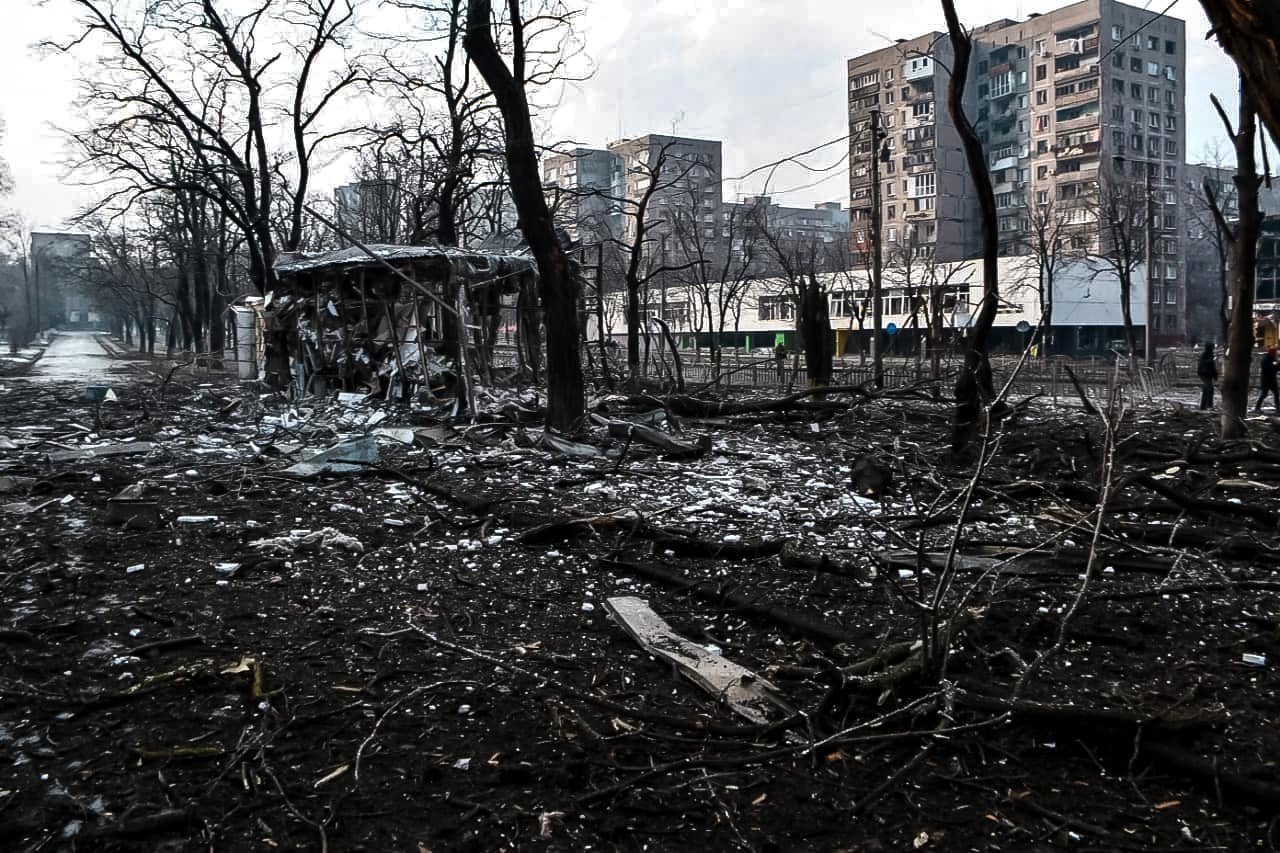
The Fall of Mariupol: The Consequences Of Mariupol In Russian Control
On Monday 16th May the devasted port-city of Mariupol appeared to be the first city taken by Russian forces since the three-month long battle began. More than 260 Ukrainian defenders, of which 53 were seriously wounded, were evacuated from the last Ukrainian stronghold in the city, based at the Azovstal Iron and Steel Works. Although a significant territorial and narrative gain for Russian, the dominant story of Mariupol appears to be one of Ukrainian bravery.
“Ukraine needs Ukrainian heroes alive,” said Ukrainian President Volodymyr Zelensky at Monday’s address when explaining the situation in Mariupol. According to Ukrainian authorities, the group had finished with their mission to tie down Russian forces in Mariupol and were under new orders. The evacuation of Ukrainian soldiers was planned through a negotiation between the warring parties, with Ukrainian fighters now under Russian custody. Zelensky has said that returning the Azovstal fighters to Ukraine will take “delicacy and time.”
The Ukrainian soldiers have been holding out at the steel plant for 82 days while the city has been bombarded by Russian advancements. The city – once home to 430 000 residents – is in rubbles, with only 100000 civilians left according to Ukrainian officials.
Why Mariupol is Important In The Ukraine War?

Mariupol has been a central place of conflict because of its strategic importance to both Ukraine and Russia. The port city provides Ukraine with access to both the Black and the Azov sea and is Ukraine’s main export centre for goods in south-eastern Ukraine.
For Russia, taking Mariupol is one of the first steps in a plan to create a land bridge from Russia to the annexed Crimea region. The decisive battle now lies in the Eastern Donbas region, which would form another piece of this land bridge if won by Russia. If achieved, the Russian corridor would affectively turn Ukraine into a land-locked state.
The Consequences of the Fall of Mariupol
As for the war, presently the significance of Russia’s takeover in Mariupol is partly symbolic. It provides Russia with a narrative ‘victory’ to celebrate after its failure to take over Kyiv. And it is a symbolic blow to Ukraine. But experts believe that the battle for Mariupol is one in which Ukraine has won the ‘information’ war.
“This Russian victory demonstrates Ukrainian strengths ironically, and Russian weaknesses,” explained the former UK intelligence officer, Frank Ledwidge. Ukrainian defenses in Mariupol lasted much longer than Russia expected, and Russia is now facing significant resourcing problems that has contributed to a disunited command on the Russian front. Russia has lost 27 000 troops since the conflict began.
This point was driven home even by a retired Russian colonel, Mikhail Khodarenok, who said: “Russia is in a position of geo-political isolation. The whole world is against us. And it is that position that we need to get out of.”
Strategically, it is unclear what actual consequences will result from Mariupol’s takeover. Although it frees up some of Russia’s armed forces and it can now focus its efforts on the South-East town of Severodonetsk, Ledwidge expects Ukraine to hold Severodonetsk despite marginal Russian gains in the region. A land-locked Ukraine is therefore not imminent.
What Will Happen to the Evacuated Ukrainian Soldiers?
It is unclear what will happen to the Ukrainian soldiers now under Russian custody. But Vyacheslav Volodin, a speaker of the lower house of the Russian parliament, has claimed that some of these Ukrainian soldiers are war criminals, and Russia may even label them as being part of a terrorist organization. Experts believe this is a strategic move by Russia to pressure Ukraine and the United States not to pursue investigations into Russian war crimes.
But this accusation also has roots in Mariupol’s recent military history. The city has apparently been home to the ‘Azov Battalion’, a regiment that has far-right roots in Ukraine. Although now absorbed into the National Guard of Ukraine, this battalion grew out of a neo-Nazi group that formed following the 2014 invasion of Crimea.
The group has distanced itself from extremist ties due to pressure from the Ukrainian government, but it still operates independently, and its members were those that led the resistance at the steel plant.
None the less, accusations of international war crimes require evidence, and some analysists believe there is much more evidence to support claims of Russian war crimes, even in Mariupol alone. The Russian assault in Mariupol has killed over 20000 civillians. This includes the deadly strikes on both a maternity hospital and a theater where civilians were hiding. MSNBC news analyst Richard Angel also points to the mass graves uncovered in Bucha and other photographic evidence of civilian killings.
An undisclosed number of Ukrainian soldiers currently still remain at the steel plant in Mariupol. Sviatoslav Palamar, deputy head of the Azov Regiment, released an 18-second video clip saying he was still inside and active, along with other commanders. Their fate in the war-torn city is still unknown.