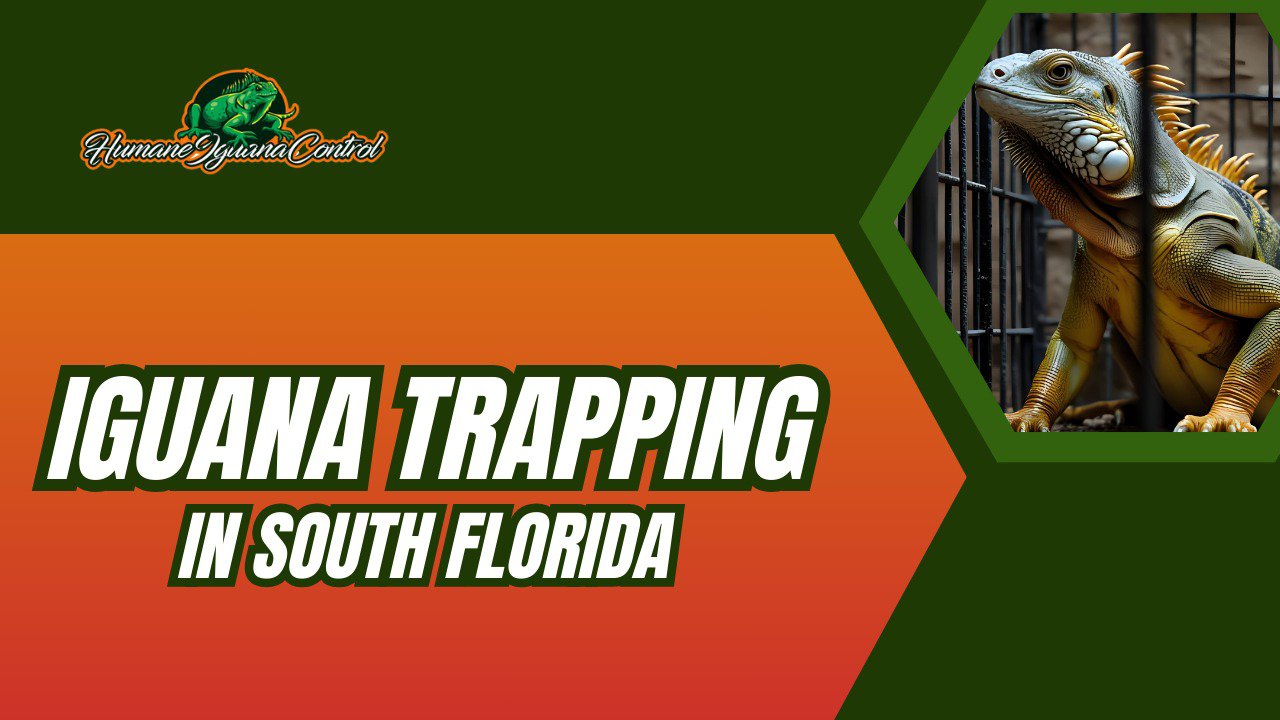
Trapping Iguanas In South Florida: How Effective Techniques Control Invasive Iguanas
Iguana Management
In this episode of The Iguana Chronicles, host Michael Ronquillo highlights the critical role of trapping iguanas in south florida in controlling invasive reptile populations across South Florida. Trapping is not just about removing a few stray iguanas from a backyard; it is about protecting homes, preserving landscaping investments, maintaining safe public spaces, and restoring balance to fragile ecosystems. From custom-built traps to strategic assessments of activity zones, trapping offers a humane, efficient, and often necessary method for addressing heavy infestations. Michael shares real-world experiences, technical insights, and valuable advice on how trapping works, and why it has become a true game changer in the ongoing fight against invasive iguanas.
Why Trapping Iguanas in South Florida Is Essential
A 24/7 Solution for Serious Infestations
Michael describes trapping as having a "24-hour employee" stationed on your property, always ready to capture iguanas the moment they make their move. However, unlike human patrols or scheduled visits, traps work tirelessly, day and night, without needing a break. Furthermore, once placed strategically in areas of high iguana activity, traps quietly and continuously help reduce populations without constant disturbance.
Trapping iguanas in South Florida is particularly vital when properties are expansive, heavily landscaped, located near water, or surrounded by neighboring infestations. It is also an ideal solution when dealing with properties where iguanas are causing serious issues like roof damage, swimming pool contamination, or structural erosion near seawalls. In commercial settings, where discretion and public safety are paramount, trapping allows effective control without alarming residents, guests, or schoolchildren.
Types of Traps Used in Iguana Control
Matching Trap Size to the Challenge
Not all iguanas, and not all properties, are the same. Humane Iguana Control uses a range of trap types based on the specific conditions encountered.
For young or smaller iguanas measuring around 12 inches in length, lightweight, sensitive traps are used. These traps are designed to respond even to the gentle weight of a juvenile, ensuring successful capture without causing harm. We deploy larger reinforced traps for adult iguanas, especially the large green iguanas that can reach up to five or six feet in length.

When infestations are significant, repeating traps are introduced. These special cages allow multiple iguanas to enter and be captured without resetting the trap after every single capture. This method is especially effective in high-density areas, where dozens of iguanas may be active simultaneously.
Each property receives a customized trapping plan, ensuring the right size, sensitivity, and location for each trap to maximize success.
The Repeating Trap: The "Iguana Decolonizer"
Custom-Built for Massive Results
One of the most innovative tools Michael’s team has developed is a custom-built repeating trap, humorously dubbed the "Iguana Decolonizer." Crafted from parts salvaged from older traps, these custom cages are larger, sturdier, and feature multiple doors — sometimes as many as six — allowing numerous iguanas to be captured one after another without human intervention.
Michael recounts an unforgettable success story in Coconut Grove, where a homeowner had recently spent thousands installing peanut grass as part of an elegant landscape redesign. Unfortunately, peanut grass, with its tender shoots and tiny yellow flowers, is a favorite delicacy for iguanas. Within days, the new landscaping became a buffet, with six or seven iguanas feasting openly, seemingly unbothered by human presence.
Deploying the "Iguana Decolonizer," the team baited the area heavily with fruits and vegetables. Within a single day, they captured over ten iguanas, and over the course of two months, more than 50 iguanas were removed from that single backyard. The homeowner, initially devastated by the damage, was ecstatic to see rapid progress and to finally reclaim his investment in the property.
Where and How Traps Are Strategically Placed
Locating High Activity Zones for Maximum Impact
Successful trapping is not just about placing cages randomly; it is a science that involves observing iguana behavior and understanding their daily patterns. Michael’s team identifies "hot spots" where iguanas congregate, feed, sunbathe, or defecate. These areas might include shaded seawalls, fruit-bearing trees, rooftops, or garden beds.

On rooftops, where iguanas often sunbathe and seek shelter in broken tiles, traps are carefully placed and baited with trails of fruit leading directly into the enclosure. Trapping on rooftops is delicate work; the goal is to minimize disruption to the home’s structure while effectively targeting the animals causing damage.
In open areas exposed to direct sunlight, traps are covered with burlap cloths. This important step prevents overheating and ensures humane treatment of captured animals, especially during Florida’s sweltering afternoons.
Humane Considerations in Iguana Trapping
Ethical Wildlife Management Practices
At the heart of Michael’s operation is a firm commitment to humane treatment. Captured iguanas must be removed promptly, ideally within just a few hours, although the legal limit is 24 hours. Leaving an animal confined without food, water, or shade for extended periods is both unethical and dangerous, particularly in the intense heat of South Florida.
Traps are checked diligently, and setups are constantly evaluated for improvements. Shade coverings, quick-response pickups, and sensitive trap designs are all part of ensuring that iguana removal is conducted ethically and responsibly, a principle that sets Humane Iguana Control apart from less conscientious operators.
Special Challenges in Commercial and School Properties
Balancing Effectiveness with Safety
Placing traps on commercial properties, school campuses, and hotels comes with additional layers of complexity. Liability concerns mean that traps must be hidden from public view, secured properly, and placed where accidental interaction is unlikely.

At schools, special attention is given to avoiding areas frequented by children. Maintenance staff are often trained briefly on how to monitor trap activity safely, ensuring that captures are reported quickly. In some cases, where trapping is not allowed, nighttime iguana removal becomes the preferred strategy, minimizing disruption and maximizing safety.
Hotels encounter similar challenges, particularly in outdoor pool and patio areas where uninterrupted guest experiences are crucial. Traps are cleverly hidden among landscaping features or maintenance zones to preserve both effectiveness and discretion.
Specialized Traps for Baby Iguanas
Capturing the Next Generation
Dealing with juvenile iguanas presents its unique challenges. Baby iguanas are incredibly agile, lightweight, and curious. To counter this, special small-scale traps are deployed, featuring ultra-sensitive mechanisms that can trigger even with minimal pressure.
Removing baby iguanas is essential in controlling the future spread of the population. Left unchecked, even a few hatchlings can quickly mature, reproduce, and worsen an existing infestation within just a few seasons.
Using Traps to Solve Pool and Roof Problems
Targeting Problematic Areas with Precision
One of the most common frustrations for homeowners is the relentless contamination of swimming pools by iguanas. Whether it is defecation in the water or staining from repeated rooftop activity, the damage can be unsightly, unsanitary, and costly to clean.
Michael’s team uses traps strategically placed near spillways, skimmer baskets, and sunning zones around pools to directly target the culprits. Bait trails are used cleverly to guide iguanas into the traps without alarming or disrupting their natural behaviors. The results are faster captures, cleaner pools, and far fewer emergency calls for contaminated water.
Thousands of Iguanas Removed — and Counting
Proven Results in South Florida Communities
Over the years, trapping has enabled Humane Iguana Control to remove thousands of iguanas from private homes, resorts, golf course communities, and schools. It remains one of the most effective, scalable, and humane strategies for managing invasive populations and protecting South Florida’s delicate ecosystems.

Whether it is eliminating iguanas from a single waterfront home or coordinating large-scale eradications across entire condominium associations, trapping continues to deliver results that manual hunting alone could never achieve.
Stay Vigilant and Partner with Professionals
Trapping iguanas in South Florida effectively is both a science and an art form. It requires not just the right tools but a deep understanding of iguana behavior, environmental conditions, and humane practices. Michael encourages homeowners, property managers, and communities to work with professionals who are trained, licensed, and passionate about protecting both people and wildlife.
By staying proactive, monitoring your property, and trusting in expert teams like Humane Iguana Control, you can keep your landscapes beautiful, your structures safe, and your environment healthy, for today and for future generations.